Tickets for the Pantheon in Rome
Here is everything you need to know to organize your visit to one of Italy’s most stunning monuments, including how to get your Pantheon tickets online and the essential details you can’t afford to miss to make the most of your trip.
Support when you need it
Customer service to help you with all your needs from 8:00 a.m. to 7:00 p.m.
Fast and online booking
Choose the best option for your needs and preferences and avoid the lines.
Top attraction in the city
Discover the city’s most famous temple and step into centuries of imperial history.
Book your ticket
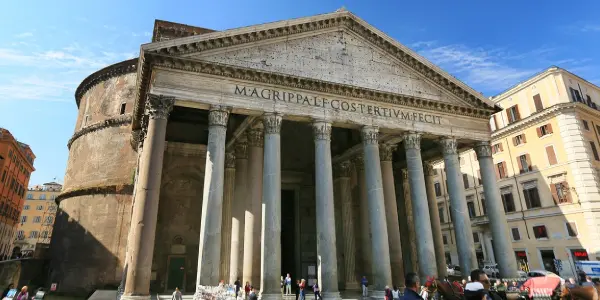
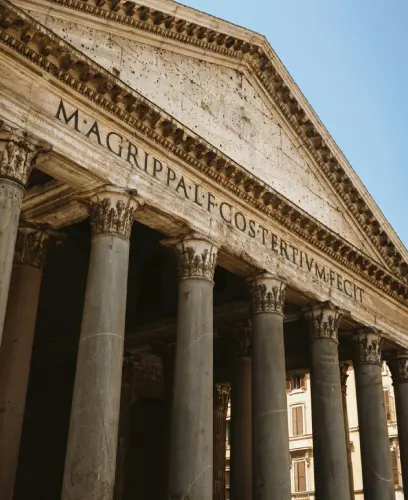
Buying your Pantheon tickets in advance is one of the most important steps for your trip to Rome. Admission to the “Pantheon of Agrippa,” as it is also known, is no longer free for tourists. This means you now need a ticket to step through its imposing bronze doors.
A general admission ticket gives you access to the temple’s interior, where you can marvel at Roman architecture in all its glory and feel the sheer scale of its concrete dome—which remains the largest unreinforced dome in the world. By securing your entry tickets for the Pantheon in Rome, you’ll be able to explore at your own pace, watching the natural light pour through the oculus above, creating an almost mystical atmosphere.
What can you see with your Pantheon ticket?
The Dome and the Oculus
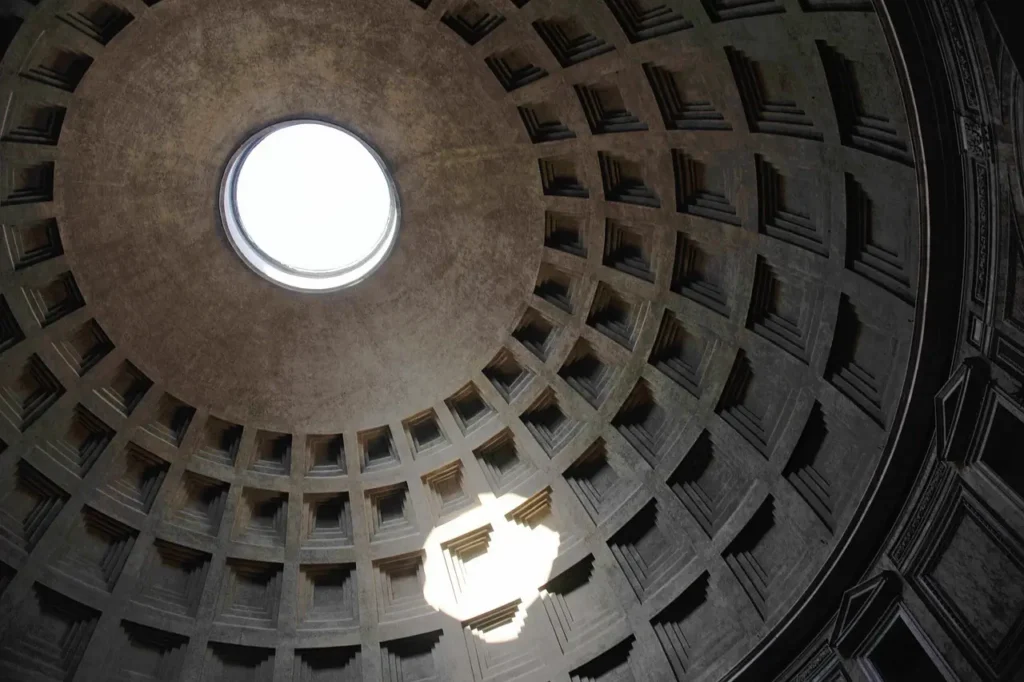
The first thing that will catch your eye when you walk in is, undoubtedly, the massive dome. It is a true masterpiece of ancient engineering that has defied time for nearly two millennia. With a diameter of over 43 meters, it will make you feel tiny as you try to wrap your head around how the Romans managed to build something so perfect without modern technology.
Right in the center lies the oculus, a circular opening nearly nine meters wide that serves as the building’s only source of natural light. Watching the sunbeams move across the walls as the day passes is an experience you should definitely savor during your trip to the Pantheon in Rome.
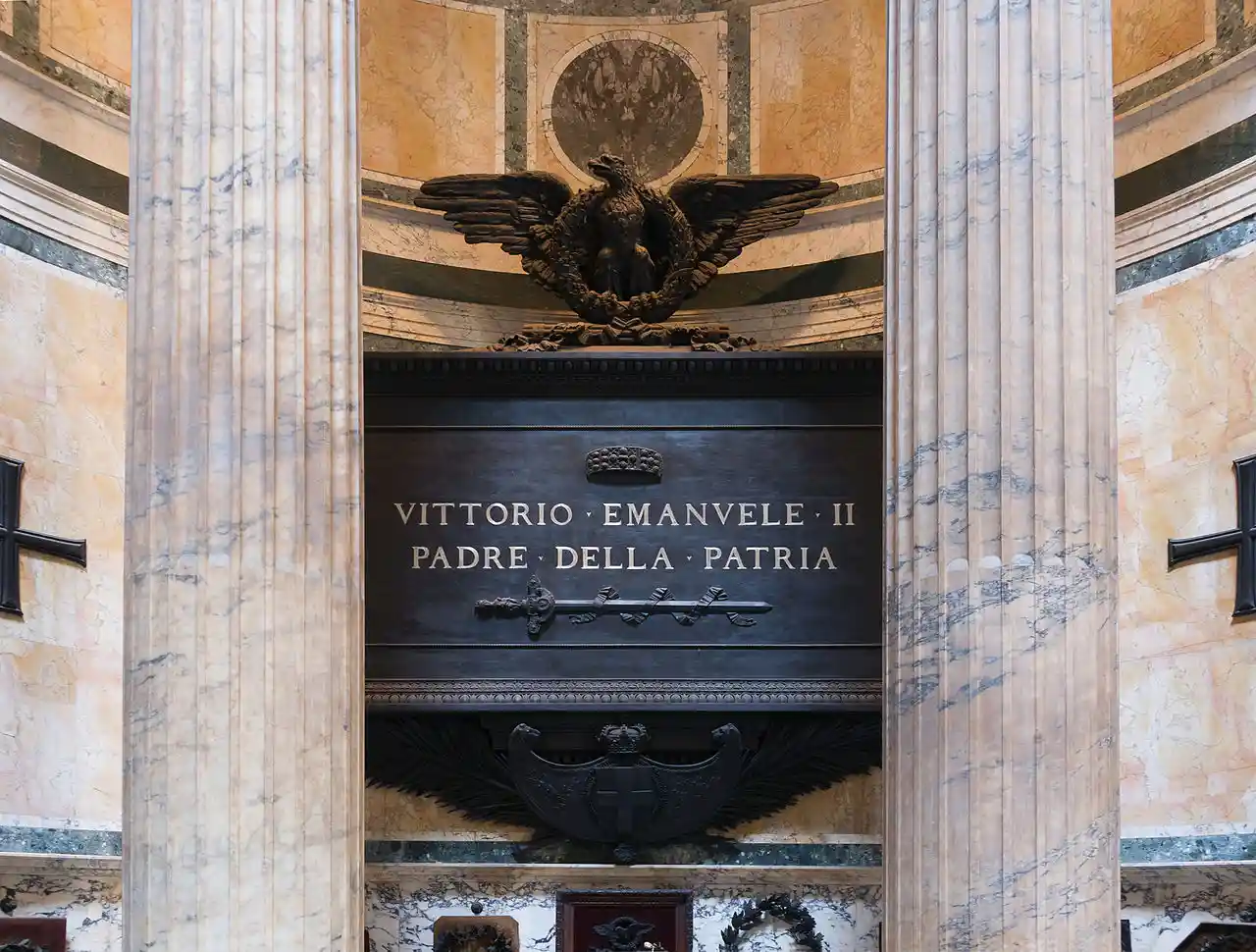
Royal and Artists' Tombs
The Pantheon isn’t just an ancient temple; it is also the final resting place of some of the most influential figures in Italian history. As you walk along the sides, you’ll come across the tomb of Raphael, one of the most brilliant painters of the Renaissance, who requested to be buried here out of his profound admiration for the building.
In addition, you’ll see the remains of the first kings of unified Italy, such as Victor Emmanuel II (“Father of the Fatherland”) and Umberto I, alongside Queen Margherita of Savoy. These tombs are surrounded by altars and sacred artworks that eventually transformed this former pagan temple into the Basilica of St. Mary and the Martyrs.
Photo: “Tomb Vittorio Emanuele II, Pantheon, Rome, Italy” by Jebulon.
What should you know before visiting the Parthenon?
To make your visit to this Roman masterpiece unforgettable, keep these tips in mind before you go:
- Book your tickets in advance: Since this is one of the most visited monuments in the world, showing up without tickets isn’t a great idea. The lines at Piazza della Rotonda to buy tickets on the spot can be exhausting. The smartest move is to book ahead to secure your time slot and walk straight in.
- Dress code: As a place of worship, the dress code is strictly enforced. You must keep your shoulders covered and avoid clothing that ends above the knee, such as short shorts or miniskirts. If you’re traveling in mid-summer, a good trick is to carry a light scarf in your bag to wrap around you just while you’re inside.
- Best ways to get there: The Pantheon is in Rome’s historic center, full of narrow pedestrian streets. Since there isn’t a metro stop right at the door, you can get off at Barberini or Colosseo and enjoy a 15-minute walk. If you prefer the bus, lines stopping at Largo di Torre Argentina or Via del Corso will leave you just a few steps away.
- Rain isn’t a dealbreaker: A little-known fact is that when it rains in Rome, it also rains inside the Pantheon because of the open oculus. The floor was designed with a nearly invisible slope and 22 small holes to drain the water. If you get a gray day, don’t be discouraged; seeing the rain fall inside is a unique sight that lets you witness Roman engineering firsthand.
- Silence and respect: Once inside, you’ll notice visitors are asked to keep their voices down. The echo in such a massive structure is huge, and as a basilica, silence helps maintain the solemn atmosphere the building deserves.
- Photography and light: The best light for photos is usually around noon, when the sunbeams hit more vertically through the oculus. However, if you’re looking for peace and quiet, the early morning hours are your best bet. Personal photos are allowed, but remember: no tripods and try not to block the way for others.
Plan your visit in advance
Don’t leave anything to the last minute! Making your reservation early ensures you can pick the time that works best for you and prevents you from missing out if the daily capacity is reached, which happens quite often during peak season.
Pantheon opening hours
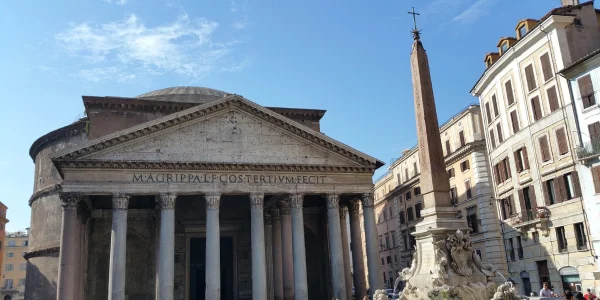
The Pantheon in Rome is typically open every day of the week, with standard hours from 9:00 to 19:00.
However, these times can vary slightly depending on the season, religious celebrations, or special events. It is important to keep in mind that the last entry is usually allowed about 30 minutes before closing, so it’s best to arrive with plenty of time to enter and explore the monument at your own pace. Additionally, tourist access may be temporarily suspended on public holidays or during liturgical services.
Closing days and special opening hours
Despite its regular schedule, the Pantheon closes its doors to the public on specific dates, such as January 1st and December 25th. Also, because it is an active church, masses and religious ceremonies are held regularly. During these events, tourist visits are usually restricted or temporarily suspended.
It is very common for tourist access to be limited on Saturday afternoons or Sunday mornings due to the celebration of the Eucharist, so we recommend checking the official website of the Italian Ministry of Culture if you have any doubts.
How to get there
The Pantheon in Rome is easily accessible by public transport, especially by bus and tram. Several bus lines that run through the historic center stop at Largo di Torre Argentina, about 400 meters from the entrance, leaving you just a few minutes’ walk away. The tram is another practical alternative, especially from neighborhoods like Trastevere, as Line 8 ends precisely at Largo di Torre Argentina, very close to the monument.
As for the metro, there isn’t a station right next to the Pantheon due to the archaeological fragility of the ground, but you can reach it on foot from Barberini (Line A) in about fifteen minutes, or from Spagna, enjoying a pleasant walk through the shopping districts.
Accessibility
The Pantheon stands out for being a fairly accessible monument, especially considering its great antiquity. The main entrance is virtually at ground level and has no difficult steps, allowing comfortable access for both wheelchair users and families with strollers. Inside, the marble flooring is smooth, although it features a slight slope designed to drain rainwater—an almost imperceptible but important detail to keep in mind.
Additionally, the visit is made even more inclusive thanks to the facilities provided for people with disabilities. As one traveler noted on Reddit: ‘Entry to various sites, such as the Pantheon, is free for people with disabilities and one companion,’ a measure that promotes access to culture and historical heritage.
FAQs about the Pantheon
Yes, as of mid-2023, tourists are required to purchase an entry ticket to go inside. While access used to be free, new regulations from the Ministry of Culture have introduced a fee to help with the maintenance and preservation of this architectural treasure.
Yes, there is a strictly enforced dress code since the Pantheon is officially the Basilica of St. Mary and the Martyrs. You won’t be allowed in with bare shoulders, plunging necklines, or very short shorts or skirts. If you’re dressed for the summer heat, the most practical thing to do is carry a light jacket or a large scarf in your bag to cover up before entering. It’s a sign of respect for those there to pray and for the history of the site.
No, it doesn’t. While your best bet is to buy your ticket online in advance, you can currently purchase them at the monument’s physical ticket office using a credit or debit card. Of course, keep in mind that depending on the time of year and the hour you visit, you might run into some pretty long lines.
The Pantheon is the final resting place for some of the most important figures in Italian history. As mentioned before, the great Renaissance painter Raphael is buried here, and his tomb is often decorated with fresh flowers left by admirers. You’ll also find the remains of the architect Baldassarre Peruzzi and the musician Arcangelo Corelli. Additionally, it serves as the mausoleum for the Kings of the House of Savoy, including Vittorio Emanuele II, known as the “Father of the Fatherland.” Walking past these tombs feels like a quick lesson in Italian art and politics all in one place.
Absolutely! One hour is more than enough time to see the interior in detail, read the information plaques, and take photos without feeling rushed. The layout is open and airy, so there aren’t many rooms to navigate; everything is concentrated in the grand central rotunda. If you’re a huge architecture or art history fan, you might want to stay a bit longer to watch how the light shifts across the marble, but for most travelers, sixty minutes is perfect for a complete and relaxed experience.
Other things to do in the city